

Writing a college essay in 2026 is no longer just about grammar, structure, and following instructions. Today’s academic environment values originality, critical thinking, authentic voice, and the ability to present ideas clearly in a world shaped by AI tools, digital research platforms, and evolving admissions standards. Whether you are applying for admission, completing coursework, or preparing scholarship essays, knowing how to write a perfect essay for college in 2026 can give you a serious advantage.
A strong essay demonstrates more than writing skills—it shows maturity, perspective, and the ability to communicate effectively. In this guide, you’ll learn modern strategies, practical steps, and expert tips to craft an essay that stands out.
What Makes a College Essay “Perfect” in 2026?
Perfection does not mean using fancy words or writing like a textbook. A perfect college essay in 2026 is:
- Clear and easy to read
- Authentic and personal when needed
- Well-structured and logically organized
- Free from grammar and formatting errors
- Insightful rather than generic
- Supported by examples or evidence
- Tailored to the assignment or prompt
- Human in tone, even when using AI tools for support
Colleges and professors increasingly recognize machine-generated writing, so authenticity matters more than ever.
Step 1: Understand the Essay Prompt Completely
Before writing a single sentence, analyze the prompt carefully.
Ask yourself:
- What is the main question being asked?
- Is it argumentative, analytical, reflective, or informative?
- Are there word count limits?
- What sources or citation style are required?
- What criteria will be graded?
Many weak essays fail because students answer the wrong question. In 2026, smart writers spend more time understanding the task before drafting.
Pro Tip
Rewrite the prompt in your own words. This helps clarify exactly what you need to accomplish.
Step 2: Choose a Strong and Original Angle
Thousands of students write essays on the same topics. What makes yours memorable is the angle.
For example, if the topic is climate change, instead of repeating common facts, focus on:
- How local communities adapt
- The psychology of climate denial
- AI’s role in environmental solutions
- Consumer behavior and sustainability
A fresh perspective instantly improves essay quality.
Step 3: Build a Smart Outline Before Writing
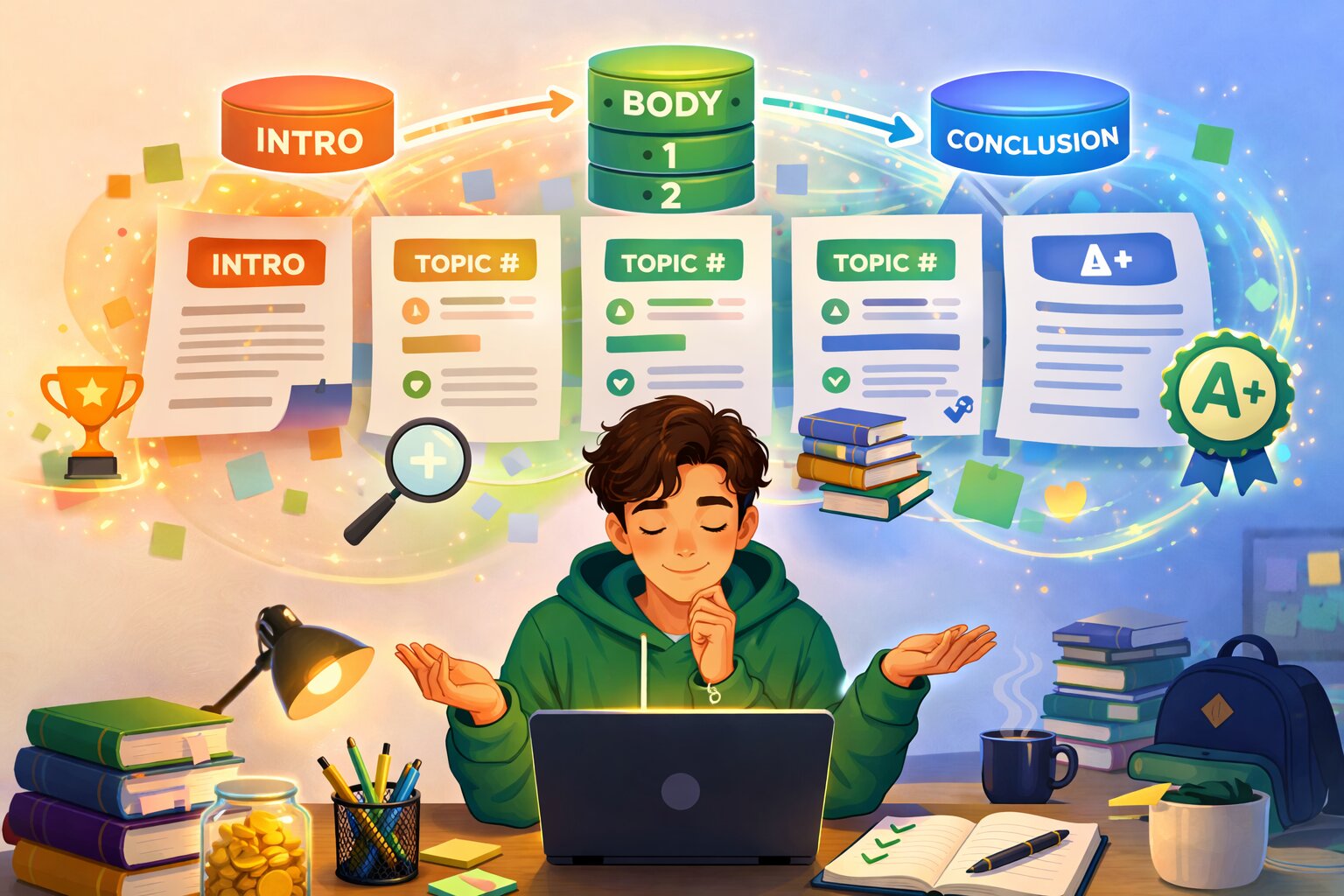
A perfect essay is built before it is written. Use a simple structure:
Introduction
- Hook the reader
- Introduce the topic
- Present your thesis statement
Body Paragraph 1
- Main argument or point
- Evidence or example
- Explanation
Body Paragraph 2
- Second key point
- Support and analysis
Body Paragraph 3
- Third point
- Counterargument or broader perspective
Conclusion
- Summarize key ideas
- Reinforce thesis
- End with a strong final thought
An outline saves time and prevents messy writing.
Step 4: Write a Powerful Introduction
The first paragraph determines whether your reader becomes interested.
Weak Opening:
“College education is important in today’s society.”
Strong Opening:
“In 2026, a college degree is no longer just a credential—it is a test of adaptability, creativity, and lifelong learning.”
Your introduction should create curiosity while leading naturally into the thesis.
Example Thesis Statement:
“To write a perfect college essay in 2026, students must combine clear structure, original thinking, credible research, and authentic personal voice.”
Step 5: Use Clear and Persuasive Body Paragraphs
Each paragraph should focus on one main idea.
Use this formula:
Point → Evidence → Explanation → Transition
Example:
AI writing tools can improve essay quality when used responsibly. Grammar assistants help students eliminate mistakes, while research tools save time locating sources. However, relying entirely on automation often weakens originality. Therefore, students should use technology as support rather than replacement.
This method creates logical flow and depth.
Step 6: Use Research the Smart Way
In 2026, research is faster than ever, but accuracy still matters.
Use:
- Academic journals
- University databases
- Government websites
- Trusted publications
- Recent statistics
Avoid random blogs or outdated sources unless relevant.
Important:
Always cite sources correctly using MLA, APA, or Chicago style, depending on requirements.
Step 7: Keep Your Voice Human and Authentic
One of the biggest mistakes students make in 2026 is sounding robotic.
Avoid phrases like:
- “Since the dawn of time…”
- “In conclusion, as we can clearly see…”
- “This essay will discuss…”
Instead, write naturally and directly.
Good writing sounds confident, intelligent, and real.
Step 8: Edit Ruthlessly
Great essays are rewritten, not just written.
After your first draft, check:
Content
- Did I answer the prompt fully?
- Is my thesis clear?
- Are examples strong enough?
Style
- Are sentences varied?
- Is wording concise?
- Does it flow naturally?
Grammar
- Spelling
- Punctuation
- Agreement
- Formatting
Final Test
Read it aloud. If something sounds awkward, fix it.
Common College Essay Mistakes in 2026
Avoid these common errors:
Overusing AI
Professors can often detect generic AI-style writing. Use tools for brainstorming and editing, not replacing your thinking.
Being Too Generic
Statements like “education is important” add no value.
Weak Thesis
Your essay needs a clear central argument.
Poor Transitions
Disconnected paragraphs reduce readability.
Ignoring Instructions
Even brilliant writing can lose marks if formatting rules are ignored.
Example of a Strong Essay Style
Instead of writing:
“Technology has changed education in many ways.”
Write:
“By 2026, technology has transformed education from passive memorization into interactive, personalized learning experiences.”
Specific writing always wins.
How Long Should a Perfect College Essay Be?
It depends on the assignment, but generally:
- Short essays: 500–800 words
- Standard assignments: 1000–1500 words
- Research essays: 2000+ words
- Admission essays: Follow exact word limits carefully
Never add fluff just to reach length.
Final Checklist Before Submission
Before submitting your college essay, confirm:
- Strong title
- Clear thesis statement
- Logical structure
- Quality evidence
- Smooth transitions
- Grammar checked
- Proper citations
- Original voice
- Meets word count
- Fully answers prompt
Conclusion
Knowing how to write a perfect essay for college in 2026 means understanding modern academic expectations. Colleges now reward clarity, originality, thoughtful analysis, and authentic communication more than empty complexity. The best essays are not overloaded with complicated vocabulary—they are smart, focused, and memorable.
Use AI tools wisely, research carefully, structure your ideas clearly, and revise thoroughly. When your essay reflects both intelligence and personality, it becomes far more powerful than something merely “correct.”
In 2026, the perfect college essay is not written by a machine—it is written by a student who knows how to think, communicate, and stand out.